
Understand How Account Records Align

Explore independent educational case studies on transaction matching, statement reconciliation, balance differences, and report interpretation.

Academic Mentorship

Specialists guiding your workbook practice

Engage directly with experienced ledger analysts and financial data educators dedicated to methodical record integrity and practical reconciliation mastery.

Sarah Jenkins, Senior Reconciliation Educator
Lead Instructor12+ Yrs Analysis

Sarah Jenkins

Senior Reconciliation Educator & Journal Auditor

Directs our core journal diagnostics curriculum, focusing on multi-column balance matching logic and rigorous variance tracking across operational accounts.


Michael Chen, Data Integrity Instructor
Systems Mentor10+ Yrs Analysis

Michael Chen

Financial Data Integrity Analyst & Instructor

Specializes in statement-to-ledger cross-referencing methods, clearing discrepancy audits, and hands-on reconciliation modeling in open source software.

Laura Mitchell, Ledger Review Specialist
Review Specialist14+ Yrs Analysis

Laura Mitchell

Reporting Standards Specialist & Workshop Lead

Leads practice groups in month-end clearing procedures, unresolved timing discrepancy reviews, and source document validation techniques.

Collaboration & Engagement

Structured engagement formats for reconciliation precision

Choose the review structure tailored to your operational rhythm, ledger volume, and internal team requirements.

Focused Session 90–120 Minutes

Single Consultation

Ideal for: Finance teams facing specific ledger bottlenecks or unresolved variance items.

  • Live diagnostic of unresolved statement differences
  • Root-cause analysis for duplicate or skipped postings
  • Actionable clearing roadmap with verified matching rules
  • Direct session summary with written discrepancy notes
Sprint Project 2–4 Weeks

One-Time Project

Ideal for: Companies handling historical backlog cleanup or system migration reconciliations.

  • Comprehensive historical transaction matching and verification
  • Isolation and classification of multi-period variance items
  • Pre-migration and post-migration ledger validation
  • Detailed close-out dossier with reconciled balance sheets
Retainer Cadence Monthly Cycle

Ongoing Support

Ideal for: Organizations requiring dependable month-end closing supervision and audit readiness.

  • Scheduled monthly bank and subledger reconciliation cycles
  • Continuous timing difference tracking and clearing reviews
  • Formal month-end variance reports and documentation
  • Periodic ledger audit trail updates and verification checks

Comparative Format Overview

Technical Comparison
Criteria Single Consultation One-Time Project Ongoing Support
Target Audience Accountants needing prompt variance verification Firms reorganizing books or switching systems Growing entities with recurring closing cycles
Primary Deliverable Triage assessment & diagnostic action plan Fully reconciled historical books & closing file Monthly reconciliation statements & audit trails
Engagement Period Single targeted working session Fixed sprint (typically 2 to 4 weeks) Quarterly or annual continuous retainer
Discrepancy Scope Isolated or urgent discrepancy cases Entire multi-year or multi-account datasets Routine transaction flows across all active accounts
Standardized Methodology

Reconciliation Stages & Control Points

A systematic four-phase audit workflow designed to isolate discrepancies, verify ledger integrity, and secure validated approvals at every critical juncture.

Phase 01: Ledger Ingestion Control Point #1

Source Documentation & Data Ingestion

The engagement commences with the formal capture of banking statements, vendor summaries, and journal books. Every data stream is validated for boundary integrity, opening balance continuity, and chronological continuity before entering analytical processing.

Client Inspects: Data extraction summary, beginning ledger position, and bank period match report.
Formal Approval Action: Sign-off on opening balance consistency and baseline register reconciliation scope.

Control Point Deliverables

  • Opening balance continuity index
  • Raw transaction ingestion tally
  • Scope definition and authorization manifest
Execution Benchmark: 24-48 Hours
Reviewer: Accounting Lead
Phase 02: Analytical Matching Control Point #2

Variance Isolation & Algorithmic Matching

Automated matching logic isolates standard clearances while flagging timing differences, duplicate records, omitted deposits, and anomalous debit postings. Unmatched items are systematically categorized into an exception tracking register.

Client Inspects: The Unmatched Transaction Matrix itemizing root causes, timestamps, and account paths.
Formal Approval Action: Verification of anomalous postings and authorization for proposed reclassification paths.

Control Point Deliverables

  • Unmatched items variance report
  • Timing difference distinction schedule
  • Potential duplicate flags summary
Execution Benchmark: 48-72 Hours
Reviewer: Compliance Auditor
Phase 03: Corrective Actions Control Point #3

Corrective Adjustments & Balance Alignment

Drafting corrective journal entries to remediate confirmed discrepancies. Every proposed adjustment is accompanied by supporting receipts, bank reference numbers, and counterparty notices to prevent retroactive distortions.

Client Inspects: Comparative pre-adjustment and post-adjustment trial balance schedules.
Formal Approval Action: Approval of correcting entries before write-back to the core general ledger system.

Control Point Deliverables

  • Correcting journal voucher docket
  • Source voucher attachment inventory
  • Provisional balanced trial schedule
Execution Benchmark: 24 Hours
Reviewer: Senior Controller
Phase 04: Completion Control Point #4

Audit Trail Generation & Final Dossier Delivery

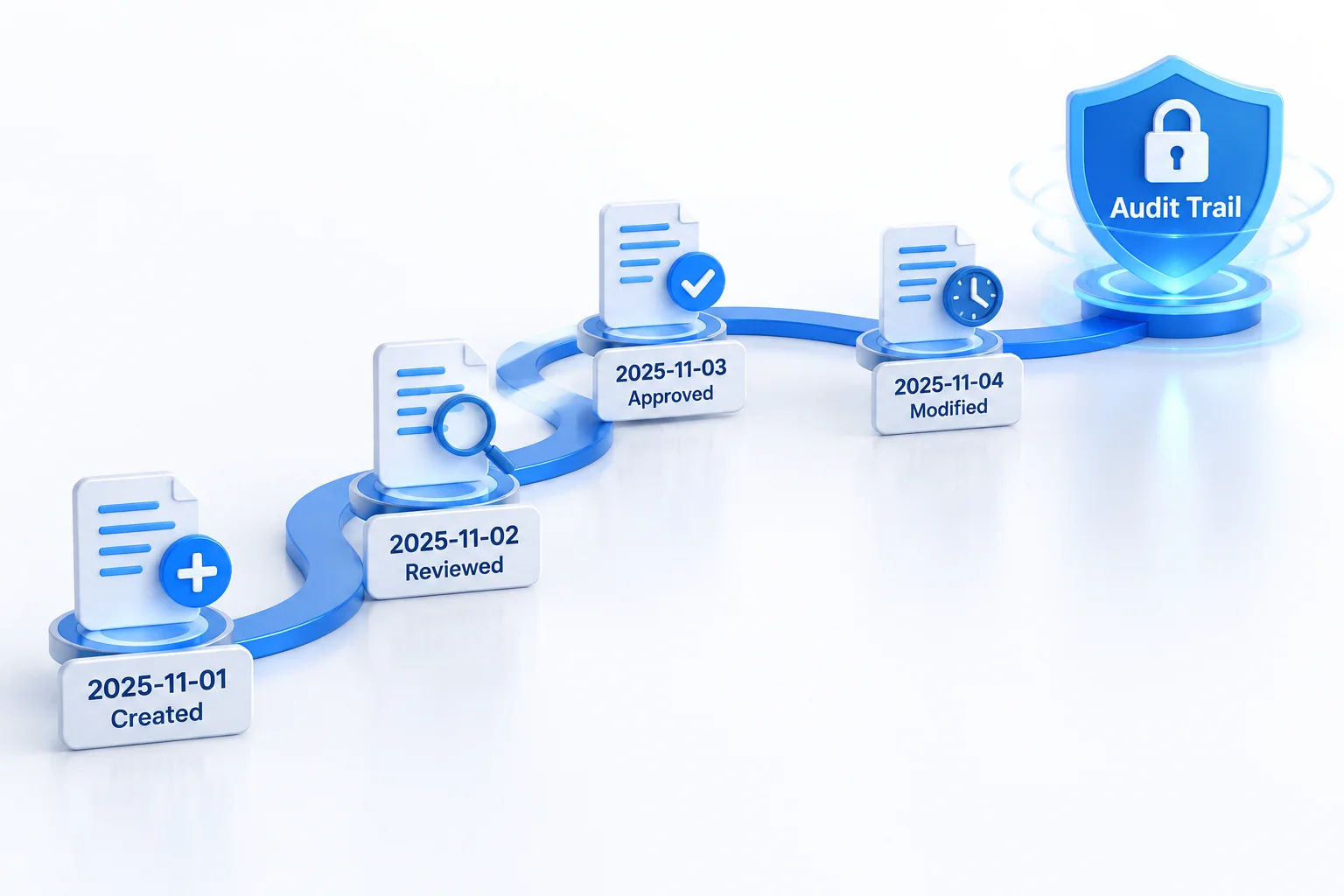
Compilation of an immutable audit documentation file. Each matched item, approved adjustment, and client sign-off is cross-indexed with verification hashes, producing a clean reconciliation statement ready for statutory review.

Client Inspects: The comprehensive Month-End Balance Certificate and permanent audit dossier.
Formal Approval Action: Final acceptance and official period locking sign-off by financial management.

Control Point Deliverables

  • Period reconciliation certification report
  • Cross-indexed electronic audit trail
  • Formal ledger freeze notice
Execution Benchmark: Same-Day Delivery
Reviewer: Chief Financial Officer
Educational Core

Reconciliation Fundamentals

The Balancing Act

Account reconciliation is the critical process of comparing two sets of records to ensure figures are in agreement. This foundational practice validates that all transactions are accurately reflected in both the internal ledger and external statements, preventing discrepancies that can complicate month-end closing.

Learn the fundamentals

Why Records Diverge

Differences between internal ledgers and bank statements are common, usually stemming from timing lags or processing delays. Understanding these nuances is essential for effective diagnostic accounting and error resolution.

Explore variance causes
Interactive Educational Workbook

Statement vs Internal Ledger Matching

Trace line-by-line correspondences between bank settlement statements and in-house cashbooks to isolate timing disparities and uncleared entries.

Display View:
External Statement

First Commercial Bank • Nov 2026

Stated Balance: $48,250.00
Date Ref # Description Outflow Inflow Status
Nov 02 TX-8801 Vendor Office Supplies $450.00 — Cleared
Nov 07 TX-8809 Client Retainer Wire — $6,200.00 Cleared
Nov 12 TX-8834 Software Hosting Charge $190.00 — Cleared
Nov 19 TX-8870 Advisory Fee Settlement — $3,500.00 Cleared
Nov 24 TX-8899 Bank Routine Maintenance $35.00 — Statement Only
Swipe to view all columns
General Ledger

Account #1010 • Operating Cash

Recorded Balance: $46,810.00
Date Entry # Description Disbursement Receipt Status
Nov 02 GL-4011 Apex Office Essentials $450.00 — Matched
Nov 06 GL-4018 Beacon Holdings Invoice #102 — $6,200.00 Matched
Nov 12 GL-4029 Cloud Infrastructure Ops $190.00 — Matched
Nov 18 GL-4034 Advisory Services Nov Billing — $3,500.00 Matched
Nov 25 GL-4042 Late Deposit in Transit — $1,475.00 In-Transit
Nov 25 GL-4045 Check #1094 to Facilities $2,880.00 — Outstanding
Swipe to view all columns
Bank Settlement$48,250.00As of Nov 30 closing
In-Transit Deposits+$1,475.00Ledger batch GL-4042
Outstanding Checks−$2,880.00Disbursement #1094
Reconciled Position$46,845.00Variance resolved: $35.00 fee
Transaction Lifecycle

Understanding Transaction Statuses

Tracking your data from entry to reconciliation.

Unreconciled

Transactions that have been entered into your ledger but have not yet been matched against the official bank statement.

Learn about entries

Cleared

Transactions that have been processed by the bank and are now appearing on your statement, waiting to be verified.

Understand cleared status

Reconciled

Transactions that have been successfully matched and locked, providing an accurate representation of your account balance.

View reconciliation process
Analytical Framework

Reading and Interpreting Statement Summaries

Standardized inspection procedures for transaction ledgers, reporting periods, and variance verification records.

Statement Inspection Matrix

Select a statement dimension to inspect cross-referencing criteria

Ledger Section Verification Checkpoint Expected Indicator
01-OPEN Opening Balance Match prior closing statement total Exact Match
02-POST Cleared Postings Batch settlement reference alignment Trace ID Valid
03-PEND Unmatched Items Pending timing differences tracking Logged to Queue
04-CLOS Ending Position Calculated ledger total vs statement closing Zero Delta
Date Parameter Validation Checkpoint Expected Indicator
T-STMP Post Date vs Value Date Identify transactions registered across month boundary Timestamp Valid
O-HOLD Transit Deposits Verify items dated within 48 hours of cycle end In-Transit Tag
L-REVW Prior-Period Adjustments Audit retroactively modified posting records Adjustment Note
Variance Type Diagnostic Rule Expected Indicator
V-DUPL Repeated Sums Scan identical amounts occurring on same ledger dates Isolate Pairs
V-RATE Conversion Variance Confirm baseline exchange rates applied on posting day Recalibrate Rate
V-OMIT Unrecorded Fees Identify bank charges lacking mirror book entries Post Adj. Slip
Open-Source Accounting

Mastering Account Reconciliation in GnuCash

Explore practical workflows, dual-window matching logic, and systematic balance verification inside the GnuCash accounting ecosystem.

Register Cleared FlagsDistinguish between unreconciled (n), cleared (c), and finalized (y) transaction states with strict integrity.
Dual-Column Difference EliminationSystematically isolate variances until the ending discrepancy reaches zero before final lock-in.
Permanent Audit IntegrityPreserve chronological double-entry records while verifying external statement checkpoints.
Reconcile Window Logic
Date Description Amount R
2026-10-24 Operational Deposit +1,250.00 y
2026-10-27 Vendor Settlement -380.40 y
2026-10-30 Merchant Processing Fee -24.15 c
2026-11-02 Pending Transfer Wire -450.00 n
Statement Balance:$845.45
Cleared Total:$845.45
Difference:$0.00
Practical Training Module

Transaction Matching Simulator

Practice real-world reconciliation workflows by identifying corresponding ledger entries, clearing timing variances, and eliminating statement discrepancies.

General Ledger vs. Bank Feed

Fiscal Period: October Close • Account #1010
Filter View:
Status Post Date Reference & Narrative Ledger Sum Statement Sum Match Action
Matched 2026-10-04 DEP-9821 • Client Retainer Wire +$4,200.00 +$4,200.00
Open 2026-10-12 CHK-4412 • Office Space Lease Payment -$1,850.00 -$1,850.00
Matched 2026-10-17 EFT-7104 • Monthly Cloud Infrastructure -$340.00 -$340.00
Open 2026-10-24 DEP-9844 • Merchant Settlement Batch +$2,310.00 +$2,310.00
Matched 2026-10-27 FEE-0199 • Bank Ledger Service Charge -$45.00 -$45.00
Open 2026-10-30 CHK-4415 • Office Supplies Depot -$460.00 -$460.00
Target Balance $18,410.00
Cleared Total $18,410.00
Current Variance $4,620.00
Discrepancy Detected

Reconciliation Procedure

Select open rows to compare supporting documents with institutional statement feeds. When all legitimate items are cleared, the variance becomes zero.

  • Examine reference identifiers and verified disbursement sums.
  • Cross-check timing windows between ledger entry and bank settlement.
  • Achieve absolute parity prior to month-end signoff.

Practical Case Studies

Real-world analysis

Latest Articles

Understanding Account Reconciliation
September 01, 2026

Understanding Account Reconciliation

Foundational concepts for accurate financial reporting.

Read more
Why Ledger and Statement Balances Differ
September 08, 2026

Why Ledger and Statement Balances Differ

Analyzing common causes for discrepancy in accounting.

Read more
Cleared and Reconciled Transactions
September 15, 2026

Cleared and Reconciled Transactions

Mastering the status of processed financial entries.

Read more
Pedagogical Framework

Case Study Methodology & Scope Limitations

Structural guidelines governing ledger reconciliation case sets, synthetic transaction design, and analytical curriculum boundaries.

Synthetic Source Files

All bank records and journal feeds are deterministically generated to model real-world recording anomalies without utilizing actual institutional client records.

Protocol 01

Double-Entry Coherence

Every simulated journal entry respects the fundamental balance sheet equation. Synthetic discrepancies stem strictly from timing, input omission, or transposition.

Protocol 02

Temporal Anchoring

Case modules operate across defined monthly and quarterly cycles, demonstrating how outstanding deposits and unpresented payments carry over closed periods.

Protocol 03

Discrepancy Taxonomy

Exercises categorize variances into distinct analytical types: timing delays, duplicate records, unposted bank charges, and clerical transposition errors.

Rule Set A

Adjusting Journal Vouchers

Workbook modules prescribe adjusting entries exclusively through documented correction vouchers, preserving an unbroken historical audit trail.

Rule Set B

Reconciliation Statements

Learners build comparative balance sheets linking adjusted cash ledger balances directly to verified banking settlement statements without shortcuts.

Rule Set C

Instructional Objectives

Case studies serve exclusively as conceptual exercises designed to cultivate systematic inspection habits, error recognition, and cross-record comparison skills.

Boundary I

Simulated Realities

Complex banking regulations and jurisdiction-specific tax filings are intentionally abstracted to keep instructional focus on core balancing mechanics.

Boundary II

Independent Application

Theoretical exercises must be adapted to institutional governance standards and official accounting policies before applying methods to operational ledgers.

Boundary III

Pedagogical Matrix & Methodological Rules

Summary of analytical constraints applied across BalanceTrace workbook modules.

Domain Simulation Method Audit Standard Educational Limitation
Bank Records
Controlled periodic statement feeds with pre-calculated settlements Daily balance continuity & sequential reference validation Fee structures and clearing delays are simplified for clarity
General Ledger
Systematic posting runs with deliberate discrepancy triggers Balanced trial totals with timestamped transaction journals Multi-subsidiary intercompany transfers are excluded
Reconciliations
Structured comparative schedules matching source lines to entries Zero-variance threshold post-adjustment with documented notes Designed for practice interpretation; non-statutory framework

Educational Use Notice & Legal Reference

Workbook materials, case walkthroughs, and interpretive notes are intended solely for academic study. For comprehensive platform terms and liability limitations, review our published legal notices.