

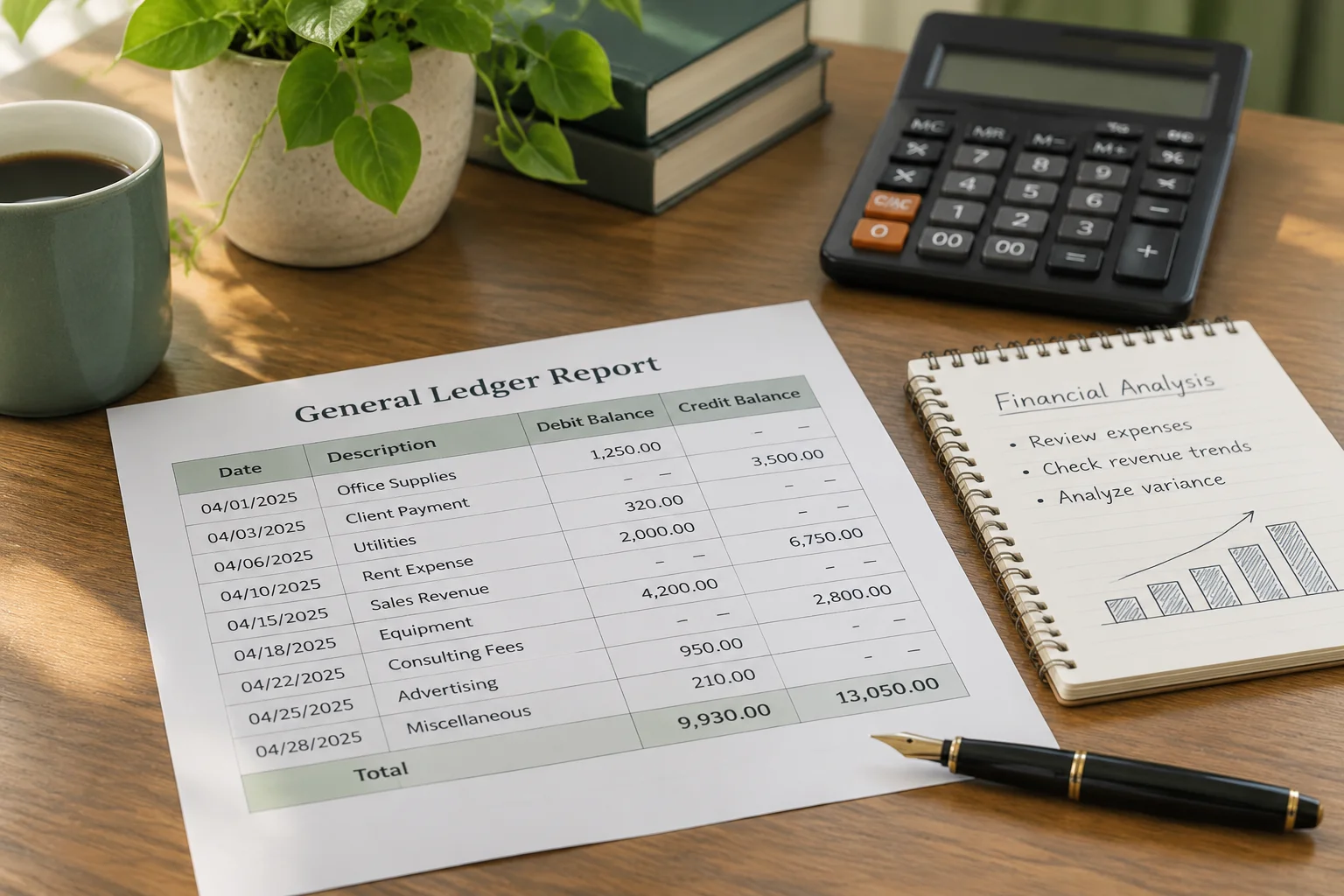
Demystifying Ledger Equilibrium & Reconciliation
BalanceTrace Workbook was established as an open-access educational workbook to equip accounting students, bookkeepers, and small enterprise administrators with rigorous ledger verification methodologies.
Traditional textbooks often treat account reconciliation as a mechanical afterthought. We approach reconciliation as the fundamental integrity check of the double-entry accounting equation. Through structured case studies, systematic error-tracking protocols, and practical software guides, our portal provides clear, reproducible workflows for maintaining balanced general ledgers.
Core Educational Pillars
Every module and article adheres to strict pedagogical guidelines grounded in formal accounting standards.
Foundational Clarity
Clear breakdowns of debit and credit mechanics, subledger balances, and the mathematical symmetry required for immaculate financial ledgers.
Applied Tool Workflows
Hands-on walkthroughs utilizing free and open-source software such as GnuCash, translating theoretical reconciliation concepts into practical software commands.
Discrepancy Remediation
Systematic approaches for isolating timing mismatches, transposition errors, unrecorded bank charges, and duplicate ledger entries with confidence.
The 4-Stage Reconciliation Sequence
The standardized workflow taught throughout our case studies and reference manuals.
Source Retrieval
Importing external bank statements and isolating the general ledger trial balance for the specified closing cycle.
Item Matching
Correlating paired settlement transactions and flagging unreconciled debits, credits, and uncleared checks.
Adjusting Entries
Compounding journal adjustments for bank maintenance fees, earned interest, and documented transposition variances.
Balance Closure
Confirming zero-difference parity between adjusted book balances and verified financial statement records.
Editorial Independence & Academic Integrity
BalanceTrace Workbook maintains complete editorial objectivity. All tutorials, exercises, and diagnostic guides are authored solely for non-commercial educational instruction. We do not promote third-party commercial financial services.